Reading order
When it comes to designing a mobile app with accessibility in mind, ensuring a proper reading order for the introduction is essential. The reading order determines how the content is presented to users who rely on assistive technologies like screen readers. Here are some guidelines to establish a suitable reading order for the introduction of your mobile app:
Logical Structure: Organize the content in a logical structure that follows a natural flow. Start with a brief and concise introduction to set the context for the app. Consider the sequence in which information would be consumed by a sighted user and replicate that in the reading order.
Headings and Subheadings: Use proper headings and subheadings to structure your introduction. Headings provide an outline of the content, allowing users to navigate through the information efficiently. Screen readers often have shortcuts to jump between headings, so ensure they are used appropriately.
Sequential Content: Place content in a sequential order. If your introduction consists of multiple sections or steps, ensure they are presented in the correct order. This is crucial for users to grasp the context and flow of the app.
Focus on Key Information: Highlight important details in the introduction to provide a clear understanding of the app's purpose and functionality. Consider the most critical aspects users need to know initially and present them early in the reading order.
Introduction
Skip Navigation: Implement a “skip navigation” link at the beginning of the introduction. This link allows users to bypass repetitive content and jump directly to the main content if they have already familiarized themselves with the introductory information.
Alternative Text: If your introduction includes images or icons, add appropriate alternative text (alt text) that describes the visual content. Screen readers can read out alt text, enabling users to understand the visual elements they may not be able to see.
Testing with Assistive Technologies: Validate the reading order by testing your app with different screen readers or other assistive technologies commonly used by people with disabilities. These tests will help identify any issues or inconsistencies in the reading order and allow you to make necessary adjustments.Remember, providing an accessible reading order for the introduction is just one aspect of creating an inclusive mobile app. It's crucial to consider other accessibility features like text size options, color contrast, and keyboard navigation to ensure a comprehensive and user-friendly experience for all users.
Flow
Top-to-Bottom Flow: Ensure that the content and interactive elements within the app are presented in a logical and meaningful order. The reading order should follow a left-to-right and top-to-bottom pattern (y-pattern) or column, top-to-bottom and left-to-right pattern, aligning with the natural reading flow of the app's target language.

Recommendations
Our recommendation for accessibility reading order is to prioritize a logical and sequential flow of information that ensures a smooth reading experience for all users. Start by structuring the content in a logical hierarchy, using headings, subheadings, and paragraphs by groups to clearly indicate the organization of information. Ensure that interactive elements, such as links and buttons, are placed in a sequential order that follows the logical flow of the content.

Example
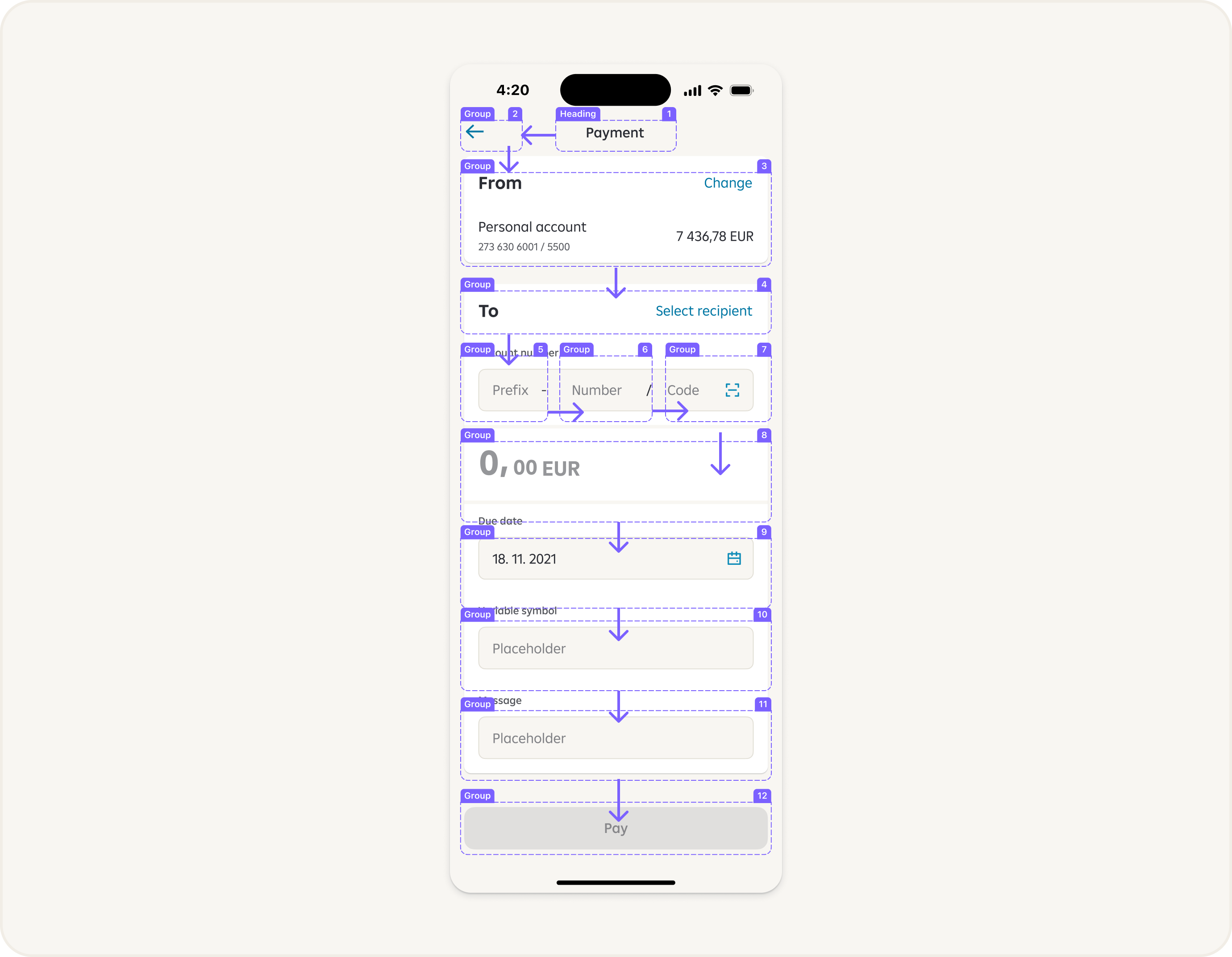
In terms of reading order accessibility, it is crucial to design the app interface in a way that ensures a seamless and logical flow of information for all users. When presenting information, ensure that it is presented in a logical sequence, with important details prioritized appropriately.
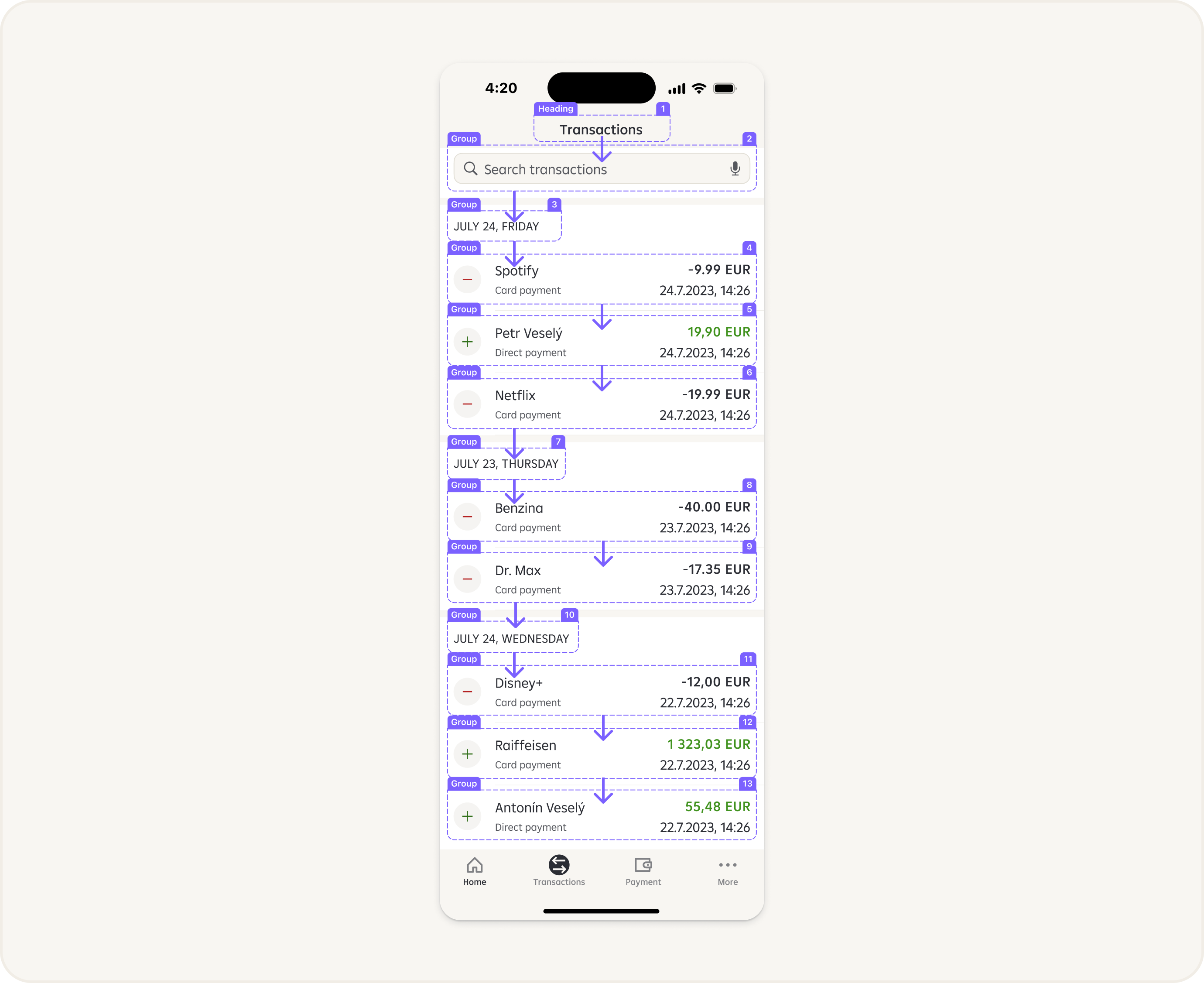
Consider utilizing headings, subheadings, and bullet points to enhance readability and enable users to scan and navigate the content easily. Additionally, provide proper labeling and descriptions for all interface elements, including icons and images, to aid users who rely on assistive technologies like screen readers.
Conclusion
Remember that the reading order should follow a logical flow, allowing users to comprehend the content easily. Prioritizing accessibility during the design and development process of your mobile app's introduction ensures that all users can access and engage with your app's content effectively. By following these guidelines, mobile app developers can create an inclusive and accessible experience for all users, regardless of their abilities. Prioritizing a logical and intuitive reading order enhances usability and ensures that users can easily navigate and consume content within the app.